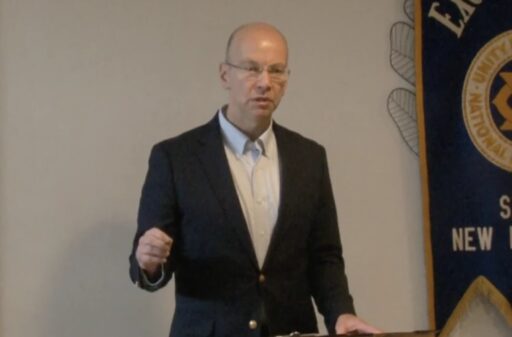
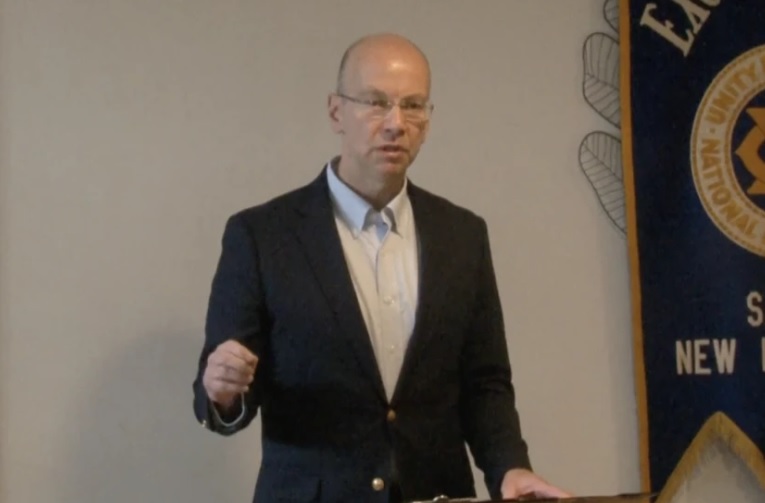

Illinois Senate President Don Harmon has spent years positioning himself as a skeptic of expanded gambling in the state — someone wary, in his own words, of “putting a slot machine in every Illinoisan’s pocket.” That reputation is now facing scrutiny after his campaign fund accepted a $50,000 contribution from the parent company of Modo, an online platform Illinois gambling regulators say is operating as an illegal casino.
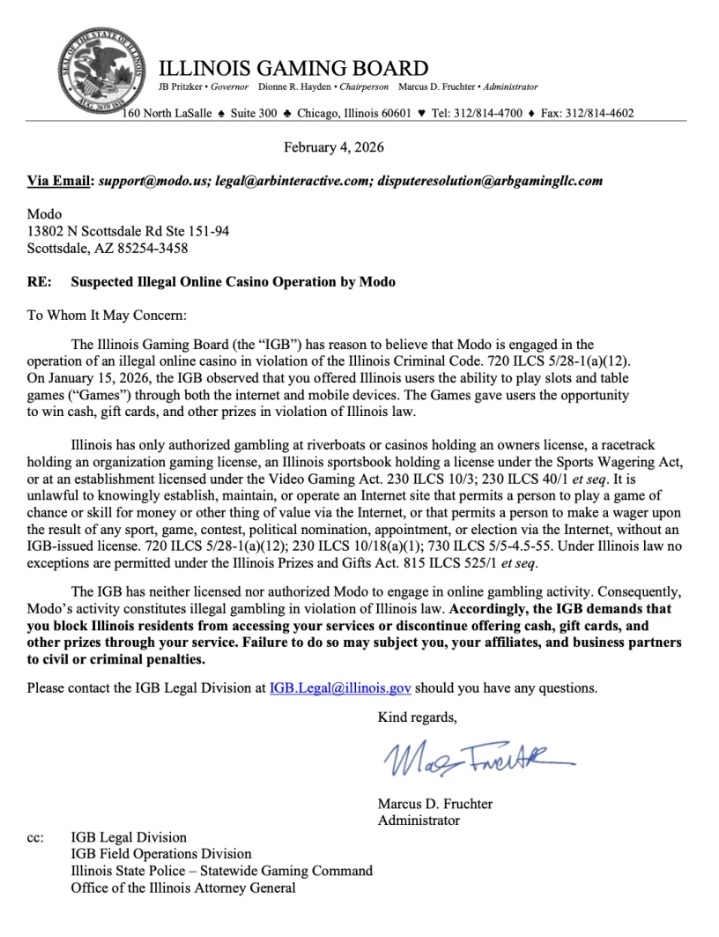
The timing alone invites questions. The contribution from ARB Interactive was recorded on January 6 — roughly a month before the Illinois Gaming Board sent Modo a formal cease-and-desist letter accusing it of offering unlicensed slots and table games to Illinois users in violation of state law. It also came shortly after Harmon met with ARB officials for about 15 minutes, according to his campaign, and just days before the start of a legislative session where gambling regulation was on the agenda.
To be clear: Harmon’s campaign says Modo’s specific business wasn’t discussed in that meeting, and it has since pledged to donate an equivalent amount to local revenue rather than keep the funds. ARB, for its part, maintains that any political giving was above board, stating that its contributions were “lawful, publicly disclosed and fully compliant with applicable campaign-finance laws.” That response deserves acknowledgment. But it doesn’t erase the underlying problem: money from a company regulators in two states have publicly labeled illegal — Arizona’s gaming regulators went as far as calling it a “felony criminal enterprise” — flowed into the campaign account of one of the most powerful lawmakers in Springfield, a man whose position gives him significant control over which legislation lives or dies.
This isn’t an isolated case, either. ARB Interactive also gave $2,500 to state Rep. Bob Rita, a key legislative voice on gambling policy who has accepted industry contributions before. And this was ARB’s first foray into Illinois political giving of any kind, paired with the hiring of a well-connected Springfield lobbyist — a combination that suggests a company looking to build influence at exactly the moment state regulators were moving against it.
Meanwhile, the regulatory response so far has been limited to warning letters, and Modo’s site remains fully accessible to Illinois users months later. A gaming board spokeswoman says the agency is coordinating with the Illinois Attorney General’s office and “evaluating all available tools” against illegal operators, but declined to detail what enforcement, if any, is actually underway. That vagueness lands differently in light of separate Sun-Times reporting on a pattern of questionable decisions and cover-ups within Illinois’s gambling regulatory apparatus — reporting that raises fair questions about whether the board is equipped, or willing, to follow through on its own warnings.
Modo’s leadership, for its part, has been publicly unapologetic. In industry interviews, top executive Patrick Fechtmeyer has argued that regulation, not prohibition, is the right approach to platforms like his, framing bans as futile given how easily online gambling operations can relocate. Neither Fechtmeyer nor ARB would comment on a separate federal lawsuit in California, which alleges the company disguised gambling as a “sweepstakes” platform to dodge regulatory scrutiny. That suit includes a striking detail: a plaintiff who says he spent many hours a day on the site and at one point asked to be demoted from “Black Diamond VIP” status as a form of self-protection — only to be told by a company employee, “I cannot do that to you. You deserve to be there.”
That single exchange, if accurately described in the lawsuit, captures the core concern advocacy groups like Stop Predatory Gambling have raised about platforms like Modo: a business model that treats a user’s attempt to protect himself from his own addiction as something to be talked out of, not honored.
None of this proves Harmon personally condoned any of this conduct. But voters have every right to ask why money from a company under active regulatory fire — and facing serious allegations in federal court — found its way into a top lawmaker’s campaign account in the first place. And Illinoisans deserve a clearer answer than “we cannot comment further” from the very board tasked with protecting them.
Returning the money is a start. It shouldn’t be the end of the conversation — for Harmon, or for the regulators still deciding what, if anything, to do about Modo.